
EDUCATIONAL TREE NURSERY AT NEGRIL PRIMARY SCHOOL PROJECT

This project is a collaborative effort between the Negril Research Centre and Negril Primary School, bringing together education, environmental stewardship, and community action. The project is supported by CCRIF SPC, under its Small Grants Programme. It is a forward-looking project that empowers students to take an active role in building a more resilient and sustainable Negril.
Why does this matter for Negril? As a coastal community, we face increasing environmental pressures — stronger storms, coastal erosion, rising temperatures, and ecosystem loss. Trees are one of the most effective and affordable natural defenses we have. They capture and store carbon, improve air quality, reduce heat, stabilize soil, provide habitat for biodiversity and enhance the beauty that supports the tourism economy.
We are intentionally prioritizing native and climate-resilient species, suited to coastal conditions. Native species support biodiversity, require less maintenance once established, and help preserve Jamaica’s natural heritage.

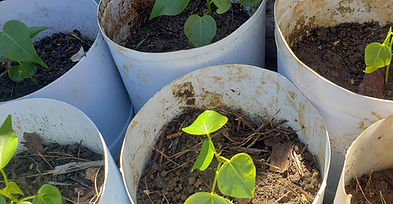

But this project is not only about planting trees, it is about educating future leaders. Students participate in collecting seeds, propagating seedlings, learning plant science, measuring growth, calculating carbon benefits and transplanting trees into the community. This approach integrates science, mathematics, literacy, and environmental studies in a way that is engaging, practical, and aligned with the National Standards Curriculum of Jamaica. Just as importantly, the nursery becomes a living classroom where students develop valuable skills, such as responsibility, teamwork, problem-solving, and long-term thinking.
The layout of the tree nursery includes a shade house, covered pot beds, a tool shed, a compost bin, a rain catchment system, and stools. The shade house is based on the Mittleider design, which is adapted to the Caribbean heat because of its double gable roof that provides adequate ventilation. Notably, this type of shade house/greenhouse is used in Cockpit Country and throughout Guyana.


This project is funded by CCRIF SPC – the Caribbean and Central America parametric insurance facility and development insurer. CCRIF offers parametric insurance coverage for tropical cyclones, earthquakes, excess rainfall, and the fisheries and electric and water utilities sectors across the Caribbean and Central America. Its parametric insurance policies enable payouts within 14 days of a hazard event, empowering governments, public utilities, and public entities to meet urgent needs, including the needs of the most vulnerable in the population, stabilize budgets, and accelerate recovery. In addition to providing parametric insurance for natural hazards, CCRIF is committed to building capacity and resilience in disaster management in the Caribbean region. Through its Technical Assistance Programme, it provides support to member countries and regional organizations to develop and implement disaster risk management and climate change adaptation projects and programmes. CCRIF also provides scholarships and internships to Caribbean nationals to study and work in areas related to disaster risk management. At the local level, through its Small Grants Programme, CCRIF provides financing for small disaster risk reduction projects in communities by NGOs, community groups and academic institutions across the Caribbean.

There are many ways that you can participate in the tree nursery project. You can answer the online questionnaire on locally important plants in Negril to provide data for students to research traditional ecological knowledge (TEK). You can take part in the tree seed collection drive as well as volunteer to plant trees on your property or to help build the tree nursery.

